Tasting flight
Five colours, one afternoon of arguing
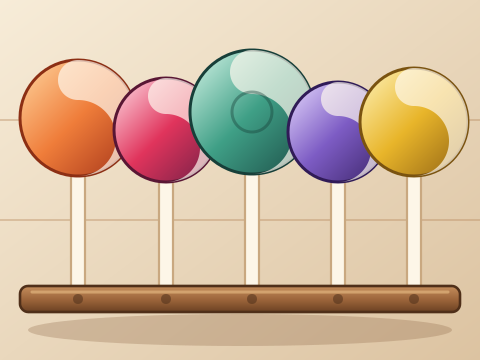
The Thursday flight is how a new flavour earns a jar. Five sticks go into the stand, unlabelled, and whoever walks past votes with a nod.
Small batch · Hand pulled
We are a two-kettle atelier in the Blue Ridge foothills, cooking lollipops in forty-piece batches and pressing real flowers, citrus peel and cracked spice into the glass while it glows. This is the journal of everything that happens between the boiler and the bow.
Field notes 01
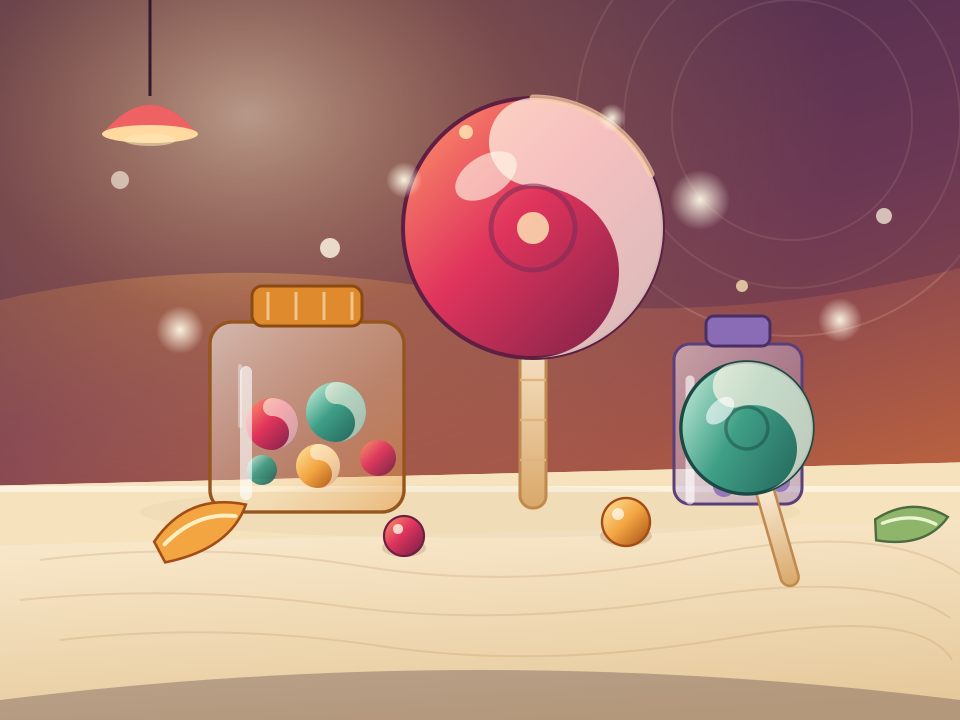
Hard candy is a short-lived material. Once the syrup passes 300 °F you have a narrow window to colour it, flavour it and shape it before it turns dull.
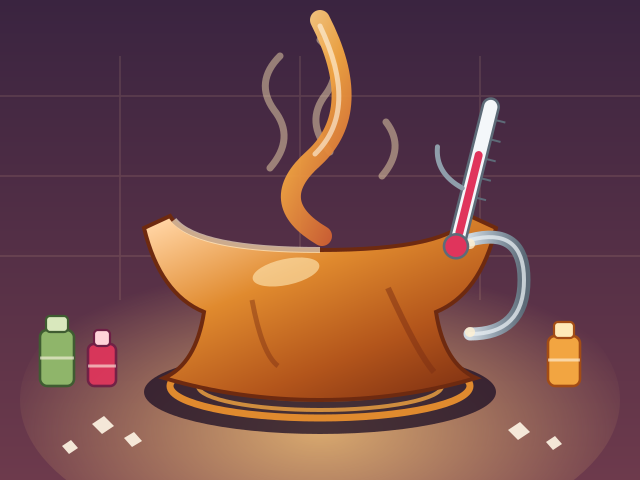
A single grain of last week's batch will seed crystals across the whole pot, and cloudy sugar cannot be rescued. Our copper kettle is scrubbed with lemon and salt, rinsed twice, and dried over a low flame before the first gram of sugar goes in. It is the least photogenic part of the job and the one that decides whether the afternoon goes well.
We cook by temperature rather than by clock. Water boils off, the syrup concentrates, and the sugar changes character at each plateau — thread, soft ball, firm ball, hard crack. Once you learn to read those stages, the candy stops being a recipe and starts being a conversation.
“You cannot rush a lollipop. You can only arrive at the right second with your hands already moving.”
Nell Marchetti, founding cook
Satin candy is pulled — stretched, folded, stretched again — until air becomes thousands of microscopic ribbons suspended inside the sugar. That is why a hand-pulled peppermint looks pearlescent and a poured one looks like stained glass. Both are beautiful. They are simply different materials, and they behave differently in the mouth.
Clear candy keeps its transparency only if it cools slowly on a warm marble slab. Drop it onto a cold surface and the outer skin contracts while the middle is still soft, producing hairline fractures that look like frost.
Field notes 02
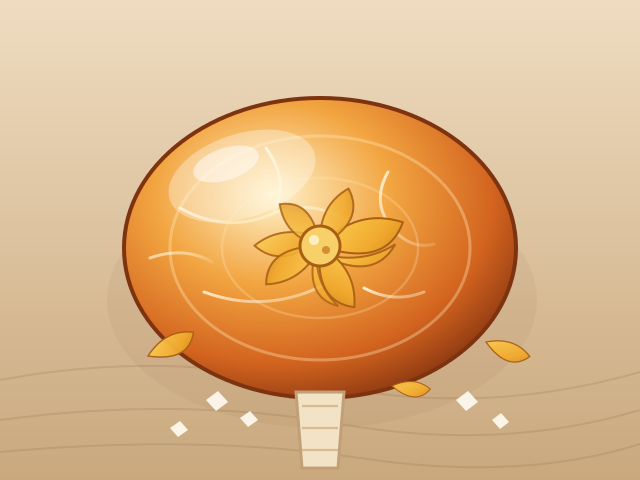
Inlay work is the part of the craft visitors ask about most. Petals, citrus zest and cracked peppercorn are laid onto the cooling surface and then covered with a thin second sheet of candy poured at a lower temperature. Done correctly, the botanical is sealed like a specimen under glass.
The second pour sits somewhere near 280 °F — hot enough to fuse with the base layer, cool enough not to cook the flower. That is a narrow band of about twenty degrees, and missing high or low is the single most common reason a batch ends up in the reject jar.
The technique is old. Confectioners were sealing violets into sugar in the nineteenth century, mostly to keep a little of the growing season on a shop counter through winter. We borrowed it for candy discs and never quite stopped.
Finished pieces cure for a day on parchment before wrapping. The surface loses its tack, the inlay settles, and the candy finally sounds like glass when you tap two of them together.
Interactive · Flavour cabinet
Pick a jar from the shelf and the tasting desk updates. Each profile reads the candy the way a sommelier reads a glass — by weight, by brightness, by what it wants to be eaten with.
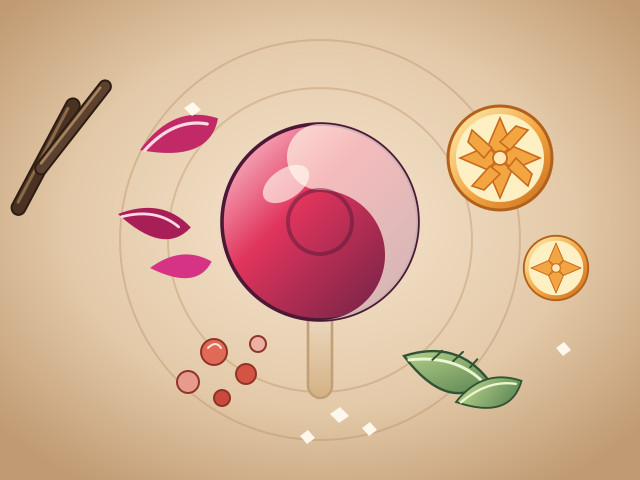
Tasting desk · notes for one jar
Hibiscus & Wild Honey
Floral · Tart
Dried hibiscus petals are steeped into the sugar base itself, so the candy reads dusty rose before you even taste it.
Interactive · Sugar stages
Five landmarks on the thermometer, and what each one means for the candy you are about to make. Tap a stage to see the note.
Kettle calibration rail
Current reading
Sugar dropped in cold water snaps clean between your teeth.
The gallery wall
Marble, brass, cellophane and a great deal of spilled sugar. A few studies from the shop floor.
The Thursday flight is how a new flavour earns a jar. Five sticks go into the stand, unlabelled, and whoever walks past votes with a nod.

Brass shears, a marble slab, a stainless scoop and a rack that has outlived three kitchens.
Candy that cures overnight loses its raw edge and gains the snap we are actually after. It is also the hardest rule to keep when the shop smells like burnt sugar.

Wreaths and ribbon in December, citrus wheels in February, and whatever the flower farm can spare after that.

Every box is folded by hand and tied with paper ribbon that costs more than the candy inside.
The calendar
Our menu follows whatever the growers around us are willing to part with. Here is roughly how the year breaks down.
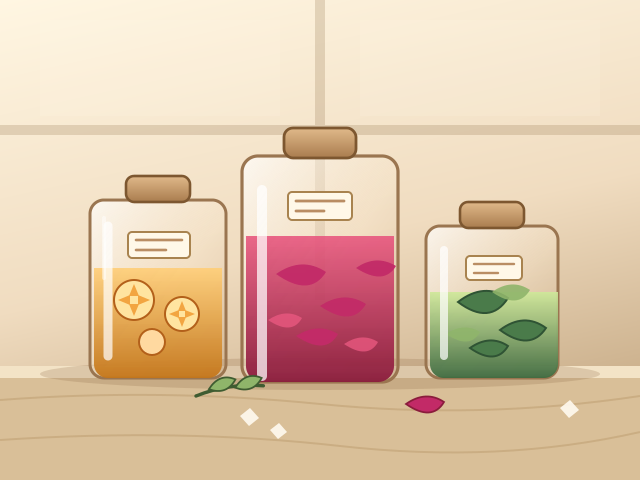
Basil, lime leaf, early mint and the first wild violets pressed into clear candy while the petals are still cool.
Peach, plum and blackberry reductions cooked down twice so the water leaves without the perfume following it out the door.
Young ginger, toasted cinnamon bark and a burnt-sugar batch we only attempt when the windows can stay open all day.
Blood orange, yuzu peel, rosemary and peppermint pulled into long ribbons for the window display.
From the bench
Questions we get
Pulling folds air into the sugar in thousands of tiny layers. Those layers scatter light instead of passing it straight through, which is exactly what gives satin candy its pearly sheen.
Sealed and kept away from humidity, most batches hold their character for several months. Citrus oils fade first; spice and cooked sugar notes tend to settle in and stay.
Where we can. Hibiscus, beet, safflower and marigold do most of the work; a few very saturated colours still need a small amount of culinary pigment to hold up in the light.
On open-counter Saturdays, yes — a few hours a month when the kettle is off and the workbench becomes a demonstration table. Details live on the kitchen page.
The standing invitation
Our open-counter mornings are informal, free and slightly sticky. Bring questions about sugar stages, botanical infusions or why your last batch turned cloudy. We will bring the coffee.
Find the atelier